Europe Nook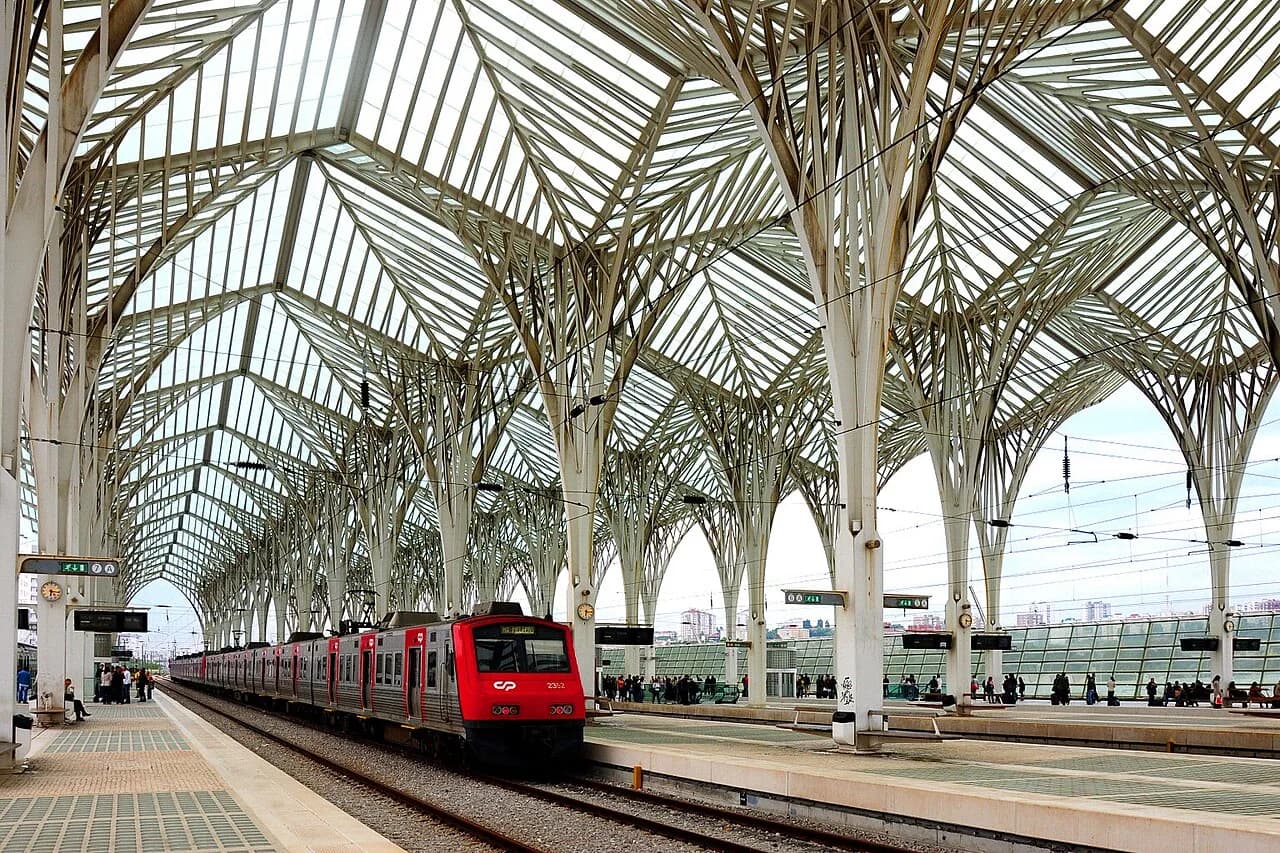
Last updated September 2026. Lisbon train stations serve different corridors, so choose the station for your specific train rather than simply searching for “Lisbon central”. Oriente and Santa Apolónia are important for northbound long-distance services; Algarve trains use the cross-city corridor through Oriente and Entrecampos. Rossio is convenient for Sintra from Baixa, but it is not the only station with Sintra services. Cais do Sodré serves the separate Cascais line, including Belém.
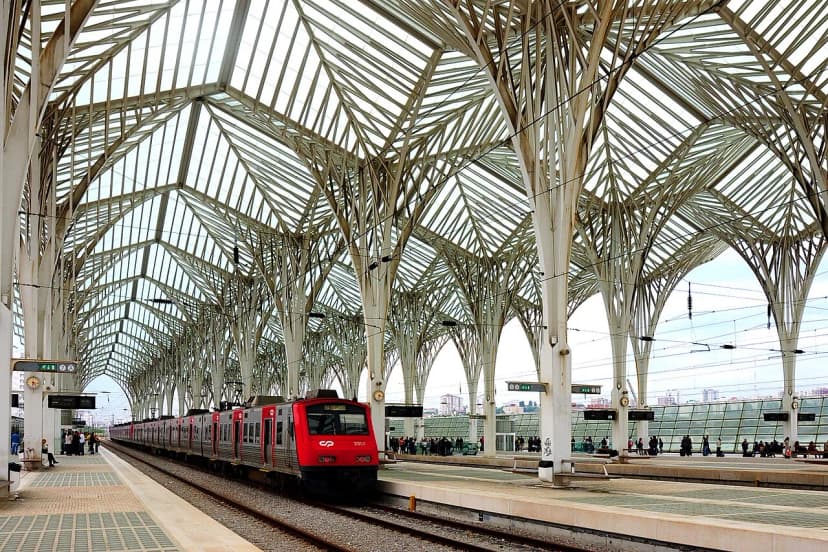
Featured image: W.Rebel, CC BY 3.0, via Wikimedia Commons. Resized and converted to WebP.
Which Lisbon Train Station Do You Need?
This guide focuses on six useful stations: Gare do Oriente, Santa Apolónia, Rossio, Cais do Sodré, Entrecampos and Sete Rios. Lisbon has other railway stops too. Match your destination to the right station in the table below. If you already have a ticket, check the departure station in the booking details, so check that first if you're unsure. Each station profile further down covers transfers, walk times, and access.
| Destination | Station(s) | Notes |
|---|---|---|
| Porto | Gare do Oriente or Santa Apolónia | Many trains call at both; use the boarding station on your booking |
| Faro / Algarve | Gare do Oriente, Entrecampos, or Sete Rios | Split across three stations depending on the service |
| Sintra | Rossio, or Oriente / Entrecampos / Sete Rios on the other corridor | Choose your branch and check the specific train |
| Belém / Cascais | Cais do Sodré | Suburban coastal line |
| Coimbra | Gare do Oriente or Santa Apolónia | Same long-distance services as Porto-bound trains |
| Madrid (international) | Historically Santa Apolónia | Direct overnight service has been suspended for years; verify current cross-border options with CP |
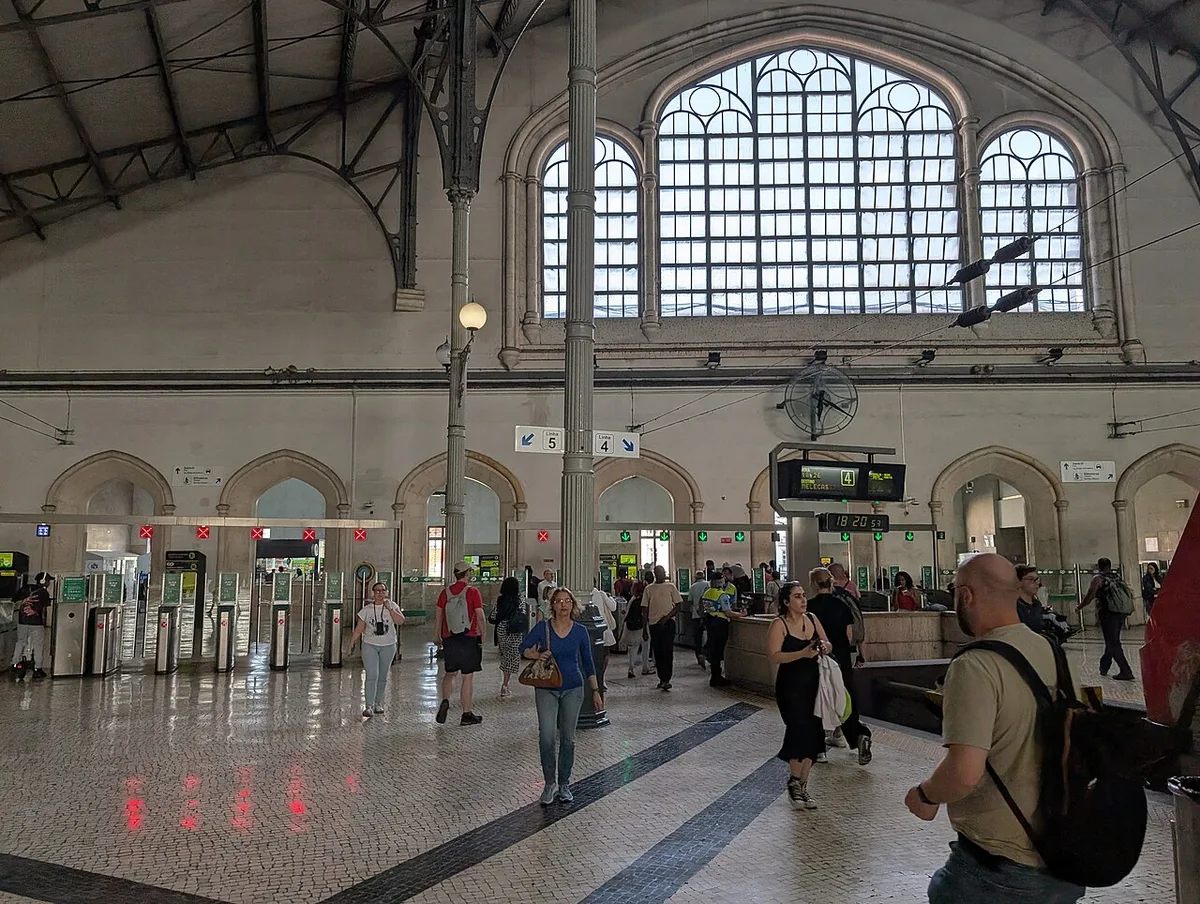
Gare do Oriente — Lisbon's Main Long-Distance Hub
Gare do Oriente opened on 19 May 1998 for Expo '98. Architect Santiago Calatrava designed the station, which sits in the Parque das Nações district. It functions as an intermodal hub. A CP train station, a Lisbon Metro stop on the Red Line, and a bus terminal share the same complex. The station complex also connects directly to the Vasco da Gama shopping centre, useful if you need supplies before a long journey. Choose Oriente for most long-distance departures toward Porto, Coimbra, and the Algarve. It also suits travelers timing a connection around an airport transfer, since the Red Line serves both Oriente and the airport. Oriente sits several kilometres from the old town, so plan on the metro rather than walking for that last leg. Check current departure boards through CP's Lisbon train information before you travel. Platform assignments and schedules can shift with engineering works.
Santa Apolónia — the Historic City-Centre Terminus
Santa Apolónia sits beside the Tagus at the eastern edge of the historic centre and connects to the metro's blue line. Many Porto-bound trains start here and then call at Oriente, but your booked train and boarding station remain the deciding evidence. Walking may suit a nearby riverside hotel; reaching a hilltop address in Alfama with luggage is a different proposition. Check the actual address and slope rather than treating “old town” as one point. Our walking route can help orient you around Baixa and Alfama after dropping your bags. For a rail connection to Oriente, use the CP timetable: that is a mainline/urban train journey, not a direct metro ride. Check storage facilities and operating hours before relying on lockers for a day out.
Santa Apolónia and Oriente have both rail and metro access, but the two modes follow different routes. Do not confuse a short CP train journey with a metro transfer requiring an interchange.
Rossio — the Station for Sintra
Rossio railway station is beside Restauradores square, convenient for accommodation in Baixa. Restauradores, on the blue metro line, is a nearby metro connection; do not confuse the railway station with the separately located Rossio metro stop on the green line. Rossio is a useful starting point for Sintra, not an exclusive one: CP's Sintra/Azambuja timetable also shows the Sintra–Oriente corridor through Sete Rios and Entrecampos. Choose the convenient branch and check the train's destination, especially for the return. A Rossio-bound and an Oriente-bound train do not return to the same part of Lisbon. If you plan a tram ride afterward, check the Tram 28 and Tram 12 guides: September 2026 diversions affect the usual Martim Moniz arrangements.
Rossio suits Baixa; Oriente, Entrecampos and Sete Rios can suit other starting points. Check the specific train instead of crossing Lisbon unnecessarily to Rossio.
Cais do Sodré — the Station for Belém and Cascais
Cais do Sodré is the Lisbon terminus of the Cascais railway and a green-line metro interchange. The adjoining river terminal serves ferries to Cacilhas and other destinations. For Belém, choose a train that calls at Belém station; do not assume every departure has the same stopping pattern. The railway station is not at the entrance to each monument. The Monument to the Discoveries and Belém Tower are in different places along the waterfront, and the tower is farther west, so allow separate walking time for your actual target. Plan both the outward and return services using CP's timetable, especially during engineering works.
Entrecampos and Sete Rios — Secondary Departure Points
Entrecampos is useful for cross-city suburban services and some southbound long-distance trains; check whether your booked train calls there. The metro connection is Entre Campos on the yellow line. Sete Rios railway station connects to Jardim Zoológico on the blue line and is near a major coach terminal. Both stations are also on the Fertagus corridor toward Setúbal. Fertagus is a different operator from CP, so check its timetable and fare coverage separately. If you are comparing coach and rail for a longer trip, compare the whole journey: departure station, arrival location, luggage conditions and any onward transfer, not just the headline fare.
Getting Between Stations and Into the City Centre
Metro connections are useful, but station names are not always identical across modes. Santa Apolónia has a blue-line stop; Rossio railway station is near Restauradores; Sete Rios rail connects via Jardim Zoológico. Oriente is on the red line, Cais do Sodré on the green line, and Entre Campos on the yellow line. Consult the CP/Metro connection map when planning an interchange. A shared complex does not guarantee a working step-free path; confirm lifts and any assistance needed with both operators. CP's online ticket terms describe connecting urban-train benefits for eligible bookings, but check whether your exact ticket and leg qualify before using one. For buses and trams alongside rail, see the public transport guide.
| Station | Metro Line | Walk to Old Town | Best For |
|---|---|---|---|
| Gare do Oriente | Red Line | Not central; use the metro | Long-distance, airport transfers |
| Santa Apolónia | Blue Line (terminus) | Near eastern Alfama; walk depends on the address and hills | Long-distance, river-side stays |
| Rossio | Blue Line via Restauradores | Already central | Sintra day trips |
| Cais do Sodré | Green Line (terminus) | Already central | Belém, Cascais, ferries |
Tickets and Costs
For a reserved long-distance journey, search your date and exact stations in CP's booking service. Promotional fares can make early booking worthwhile, but availability and exchange/refund conditions vary. The Lisbon urban network page concerns suburban travel, not every Porto or Algarve reservation. A reusable transport card does not make all operators interchangeable: it must hold a product valid for the journey. The Metro fare page and our metro ticket guide cover city travel. Compare the Lisboa Card against ordinary tickets using both transport and admission benefits; repeated station visits alone do not justify a sightseeing pass.
Mistakes to Avoid
A few recurring errors account for most missed connections at Lisbon's stations.
- Booking to 'Lisbon' without checking the station: Porto and Faro trains can leave from more than one station on the same day.
- Assuming Sintra trains use Rossio only: the Oriente corridor is another option, so compare your actual starting point.
- Cutting a Santa Apolónia-to-Oriente transfer too close: the suburban connection isn't a guaranteed same-platform change.
- Assuming a direct train to Madrid still runs: that overnight service has been suspended for years, so verify current cross-border options with CP.
- Underestimating hills between a riverside station and an Alfama address when carrying luggage.
- Assuming a card is valid everywhere without checking its loaded ticket, operator and zone coverage.
- Ignoring weekend timetables: some suburban and regional services run less often on Saturdays and Sundays, so check the specific day before finalizing plans.
Frequently Asked Questions
How many train stations does Lisbon have?
This guide covers six particularly useful stations: Oriente, Santa Apolónia, Rossio, Cais do Sodré, Entrecampos and Sete Rios. That is not a count of every railway stop in Lisbon.
Which station do trains to Porto depart from?
Many Porto-bound trains call at Santa Apolónia and Oriente. Check your specific service and the boarding station on your booking rather than assuming every train calls at both.
Which station do trains to Sintra depart from?
Rossio is convenient from Baixa. Sintra also has services on the Oriente corridor via Entrecampos and Sete Rios; consult CP's timetable for the train and return destination that suit you.
Is Gare do Oriente connected to the Lisbon Metro?
Yes, Oriente has its own stop on the Lisbon Metro's Red Line. It also connects to a bus terminal, making it one of the city's most connected transport hubs.
Which is the oldest train station in Lisbon?
Santa Apolónia is generally cited as Lisbon's oldest working station, dating to the 1860s. It remains a major terminus for long-distance and regional trains today.
Where is Lisbon's main bus station?
Sete Rios and Oriente are both important coach hubs. The correct stop depends on the departure you booked, not just the destination or operator name. Use the bus station guide to distinguish them.
Do Lisbon's train stations run the same schedule on weekends?
Timetables can vary between weekdays, weekends and holidays. Check the correct date and any engineering notices rather than applying one frequency to every line.