Europe Nook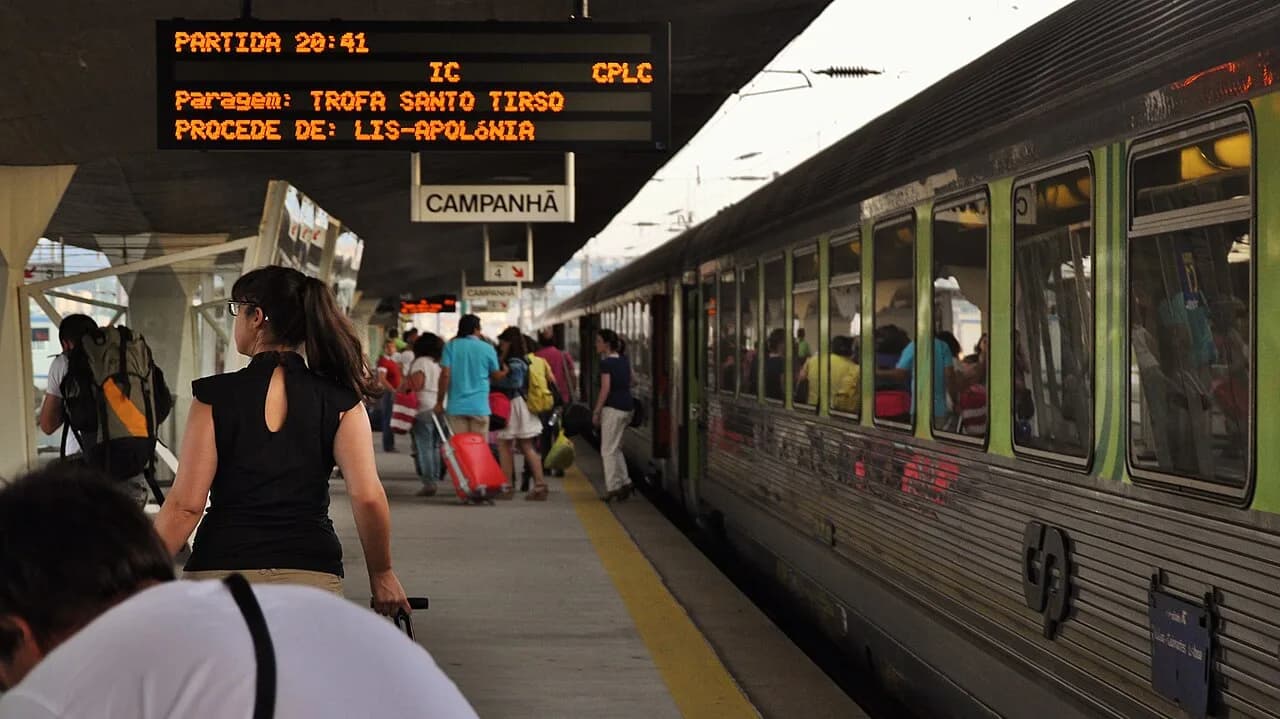
Last updated September 2026, this Porto train station guide focuses on the two stations most visitors need: Campanhã for mainline connections and São Bento for the historic centre. They are different places, not alternative names for one terminal. Check both the boarding station and any connecting leg before leaving your hotel.
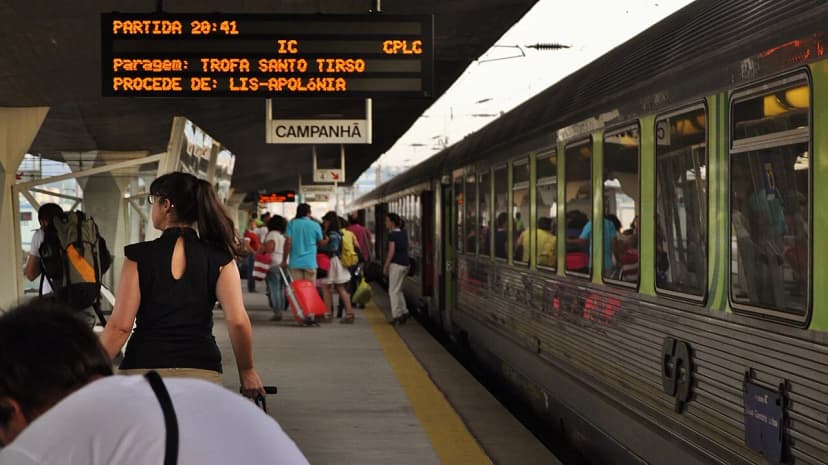
Featured image: Campanhã platform in 2012, shown as a station illustration rather than a current departure display, by Giugiaro, CC BY-SA 3.0, via Wikimedia Commons. Resized and converted to WebP.
Porto Train Station: Campanhã or São Bento?
Start with the station printed on your itinerary. Alfa Pendular and Intercidades journeys to Lisbon use Campanhã, while São Bento is the central terminus familiar from photographs of its tiled hall. The international Celta service also departs Porto Campanhã for Vigo-Guixar. Many urban and Douro journeys can involve São Bento, but not every service starts there or continues there. A booking search showing São Bento for a long-distance trip can include a connecting urban train rather than a direct mainline departure. Read the individual legs and train numbers. Do not change stations simply because a hotel receptionist or map app calls one 'the main station'. The correct choice is the station for your actual train, followed by the easiest connection to your accommodation.
- Lisbon mainline train: find the Campanhã leg on the itinerary, even if your overall journey starts at São Bento.
- Celta to Spain: use Porto Campanhã; the Vigo station is Vigo-Guixar.
- Urban and Douro trips: check the specific train's origin and stops, not just the line's destination name.
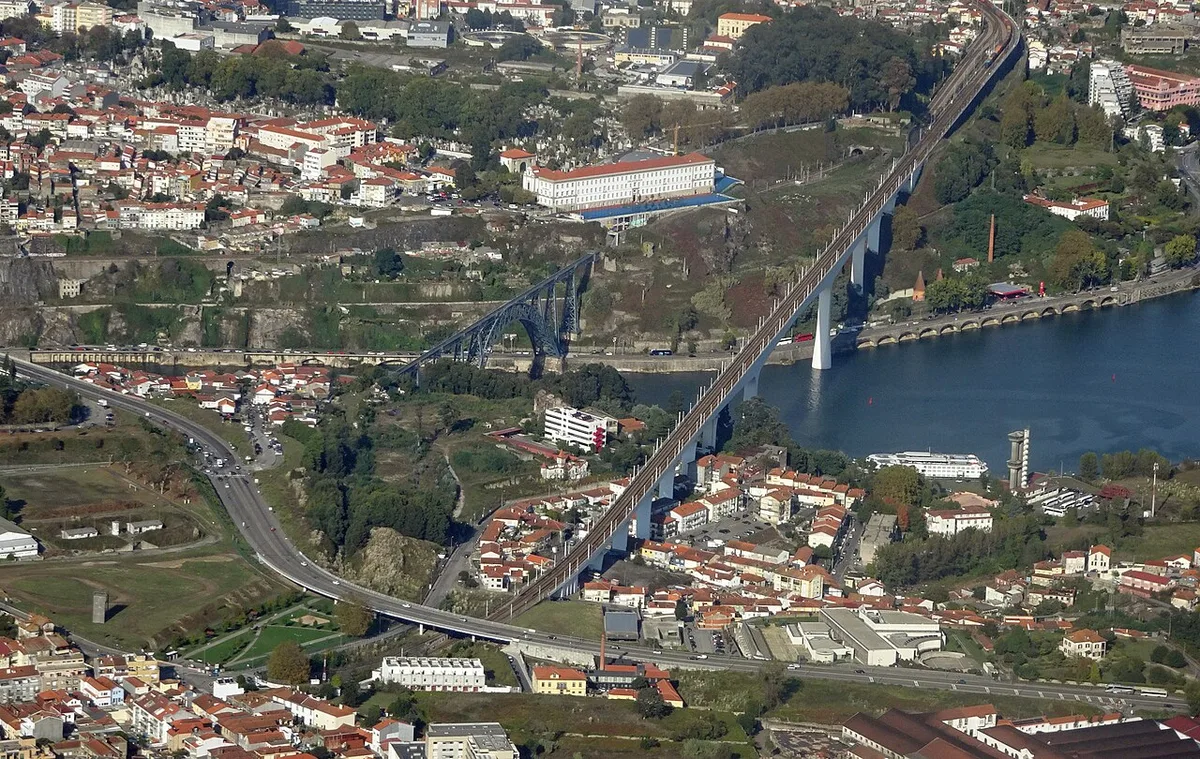
Porto Campanhã: Long-Distance and International Arrivals
Campanhã is the practical interchange for long-distance trains, local rail and the metro. It is east of the historic centre, so an arrival there is not the same as stepping out beside the cathedral or Ribeira. Use CP's current timetable directory or its journey planner to identify the onward train. For a central hotel, compare the short rail connection to São Bento with a metro route closer to the hotel's address. Follow the departure board rather than assuming a permanent platform number, and leave time to move between platforms with bags. The nearby Campanhã coach terminal is part of the wider interchange but is not a rail platform. A coach departure may require another walk through the complex. There is no useful universal transfer time that covers every combination of platforms, luggage and mobility needs.
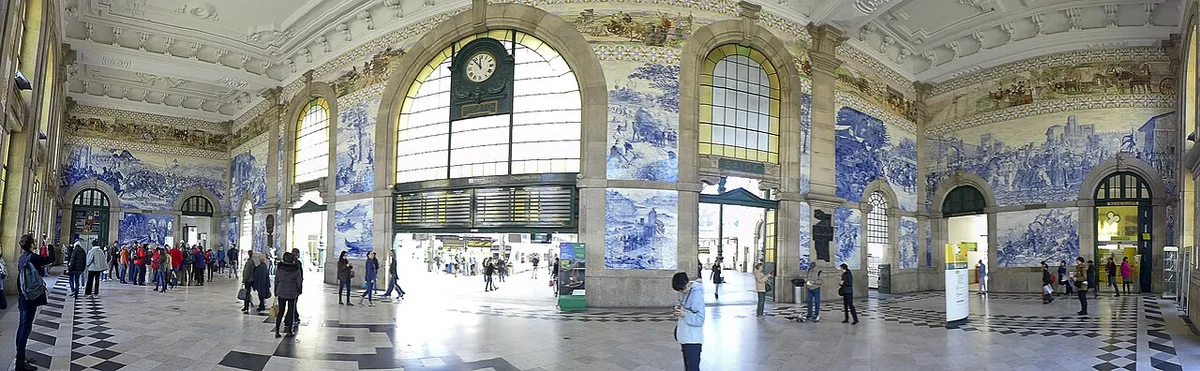
Porto São Bento: Historic Centre Terminus and the Azulejo Tiles
Visit Porto's station listing places São Bento on Praça de Almeida Garrett and identifies its roughly 20,000 tiles by Jorge Colaço. That makes the entrance hall a worthwhile sightseeing stop as well as a working railway space. Keep doorways and passenger routes clear when taking photographs, and do not mistake time spent in the hall for time available to reach a platform. São Bento is a convenient starting point for a central walking route, but the walk down toward the river still involves Porto's slopes. The railway station and the nearby São Bento metro station on Line D are distinct facilities. Follow metro signs to the appropriate entrance; do not assume a direct passage from the railway ticket hall or treat a CP platform as a metro boarding point.
Campanhã vs. São Bento: Which One Matches Your Trip
Choose according to the journey leg rather than which building looks more central. This comparison separates station function from the final walk to a hotel or attraction.
| Station | Main visitor role | Connection to the other station | Useful planning point |
|---|---|---|---|
| Campanhã | Alfa Pendular, Intercidades, Celta and urban/regional interchange | Direct CP urban trains toward São Bento | Check rail versus coach-terminal directions and allow platform-transfer time |
| São Bento | Historic-centre terminus and urban/Douro departure point for selected services | CP trains toward Campanhã | Line D metro is a separate nearby station; check the street entrance |
Getting Between Campanhã and São Bento
A direct CP urban train is normally the simplest rail link between Campanhã and São Bento. The Aveiro-line timetable effective 26 July 2026 shows examples taking about four to five minutes between them. That is onboard time only, not a safe allowance for a mainline connection. Add waiting, finding the platform, boarding and any assistance needs. Several routes contribute services, so use a date-specific search rather than assuming a fixed five-to-fifteen-minute frequency all day. For the metro alternative, the normal route involves changing at Trindade for Line D to São Bento; it is not the same direct four-minute trip. A dated metro works notice closes Campo 24 de Agosto–Senhora da Hora from 22:00 on 12 September to noon on 13 September 2026. Replacement buses are scheduled every ten minutes, with the specific instruction to validate inside metro stations, not on those buses. This is a metro notice, not evidence that the separate CP rail link is closed.
Tickets, Fares, and Luggage Storage at Each Station
Do not automatically buy another ticket for the Campanhã–São Bento connection. CP's current app conditions include an urban connection for qualifying regional, interregional and long-distance tickets to or from Campanhã. The stated window is the hour before the main train departs or up to one hour after it arrives. Keep the main ticket and check that your connection meets those conditions; this is not free travel on the metro or permission to use urban trains all day. If buying local travel separately, appropriate Andante tickets can cover participating CP urban sections as well as metro and buses. CP's Andante information defines the rail limits, which do not extend automatically to every destination on the suburban network. The metro ticket guide and zone guide explain the ticket choice. For bags, CP confirms automatic lockers at both stations, a 24-hour maximum and access tied to station opening hours. Check available sizes, current prices and retrieval instructions at the machine; availability and a particular locker position are not guaranteed.
Onward Travel: Metro, Tram, Bus, and the Porto Card
Match onward transport to the destination's street address, not just its neighbourhood name. Heritage trams can be a later sightseeing activity but are not a substitute for every station transfer. STCP Serviços currently marks the Guindais funicular closed for maintenance, so do not rely on it as a luggage shortcut to Ribeira. The funicular guide explains the alternatives. For visitors flying in, the airport guide covers the metro connection and its present works caveat. A Porto Card offer is a separate sightseeing-product decision, with current purchase availability unconfirmed in our checks; it is not required to make these station connections. Use the transport overview for the broader choice between walking, bus and metro.
Luggage, Accessibility and Where to Base Yourself
A hotel near São Bento can simplify a sightseeing-heavy stay; one near Campanhã can suit an early mainline departure. Those are itinerary trade-offs, not a rule that all visitors should avoid one neighbourhood. Check the final approach to the actual accommodation, including slopes, steps and the entrance location. If you require boarding assistance, consult CP's SIM mobility service before travel. CP distinguishes passengers using wheelchairs or mobility scooters from those needing other assistance, so do not assume every train and station combination offers identical arrangements. Reserve the necessary help and allow enough time for the interchange. A photograph of an accessible urban carriage does not establish the whole route to a hotel. Travelling light can make either station workable; with several bags, a direct road transfer may be easier than combining rail, metro and a steep walk.
Mistakes to Avoid
Before leaving for a train, check these details together. Each prevents a different type of station mix-up.
- Read the station, departure time and train number for each leg; a ticket from São Bento to Lisbon can include a change at Campanhã.
- Do not use a four-to-five-minute onboard journey as the entire transfer allowance.
- Check whether your qualifying CP ticket already includes the urban connection and whether you are within its one-hour window.
- Do not extend that CP connection benefit to the metro, or assume all Andante tickets cover the full suburban rail network.
- Keep coach-terminal, railway-platform and metro directions separate at Campanhã.
- Confirm locker retrieval hours and assistance arrangements before committing to a sightseeing stop between trains.
Frequently Asked Questions
Is Porto Campanhã or São Bento the main train station?
Campanhã handles mainline and international connections, including Alfa Pendular, Intercidades and Celta. São Bento is the historic-centre terminus used by selected urban and Douro services. Use the station named on your train's individual itinerary leg.
How do you get from Porto Campanhã to São Bento?
Take a direct CP urban train that calls at São Bento. Timetable examples take about four to five minutes aboard, but you must allow extra time for waiting and changing platforms. Check your date rather than relying on a fixed all-day interval.
Which Porto train station is closest to the historic centre?
São Bento is on Praça de Almeida Garrett in the historic centre. Campanhã is farther east. The easiest final connection still depends on your hotel's exact street and the hills or steps along the way.
Is the Campanhã–São Bento transfer included in a CP ticket?
CP's current conditions include the urban connection for qualifying regional, interregional and long-distance tickets to or from Campanhã, within one hour before departure or one hour after arrival. Check your ticket's conditions. The benefit does not include the metro.
Can Andante be used on trains as well as the metro?
Yes, on participating CP urban sections with the appropriate ticket and zones. It does not cover every CP train or the entire suburban network automatically. A CP mainline ticket and an Andante local ticket are different products.
Which station do trains to Lisbon leave from?
Alfa Pendular and Intercidades trains to Lisbon use Porto Campanhã. If booking from São Bento, inspect the urban connecting leg and leave enough time to change trains.
Where can you store luggage at Porto's train stations?
CP lists automatic lockers at both Campanhã and São Bento. The stated maximum is 24 hours, with access during station opening hours. Check the machine for current prices, sizes, availability and collection instructions.