 Europe Nook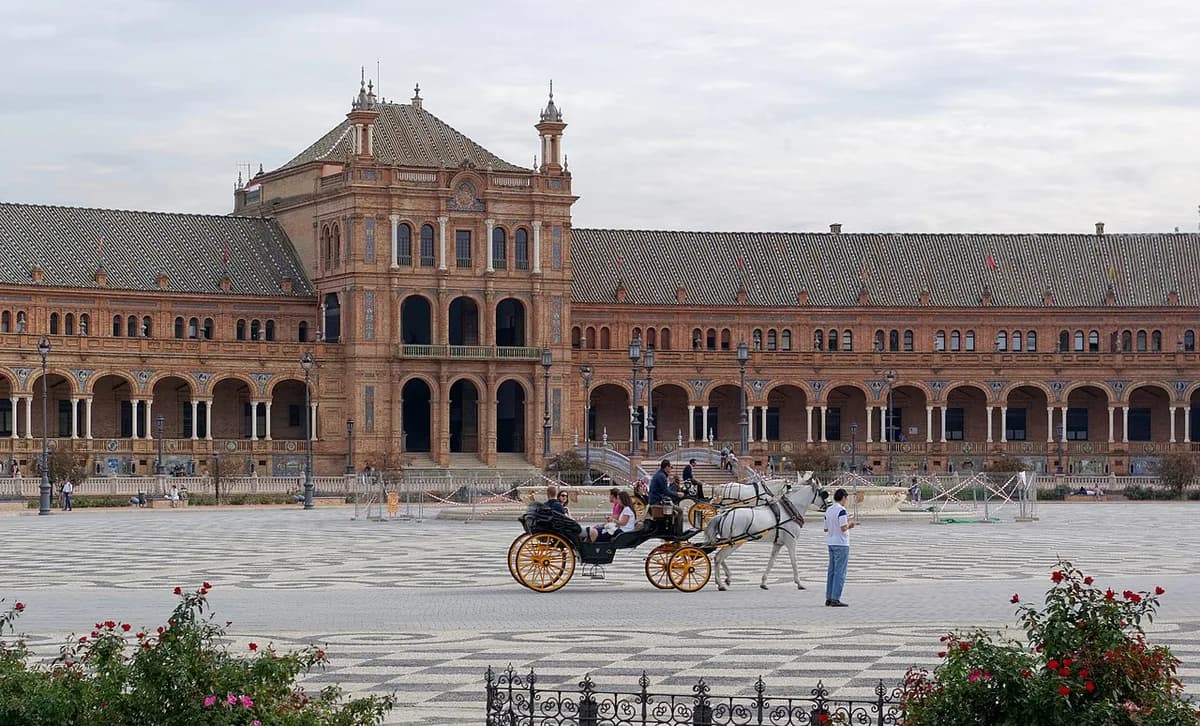
Last updated September 2026. This Seville self-guided walking tour runs from Plaza de España to Las Setas, with the Cathedral, Alcázar exterior and Santa Cruz along the way. It is a point-to-point walk, not a loop: plan your journey home from the finish. Allow a relaxed morning for outdoor sightseeing, or shorten the route by starting at Puerta de Jerez. Ticketed interiors and the optional Triana branch need separate time. For a separate day beyond Seville, the Carmona bus guide explains the journey and return planning for another historic-town walk.
Featured image: Plaza de España, the main route’s starting landmark. Berthold Werner, CC BY-SA 3.0, via Wikimedia Commons. Resized and converted to WebP.
Seville Self-Guided Walking Tour: Choose Your Route
The main route links Plaza de España → Puerta de Jerez → Plaza del Triunfo → Santa Cruz → Plaza del Salvador → Las Setas. The Santa Cruz detour returns to the Cathedral area before continuing north. Our timings below are editorial planning allowances for this route, not a GPS track or a promise about your walking speed. They include pauses at outdoor landmarks but exclude queues, meals, transport to the start and paid visits.
You do not need attraction tickets simply to follow the public streets and view the buildings from outside. Check local barriers, events and access signs, especially around Plaza de España. A short visit is still worthwhile without entering a monument, but it gives a different experience from touring the palace gardens or Cathedral.
Use the official Seville city map alongside the street sequence below. Save it before setting out. It establishes the landmark layout, not today's pavement closures, lift operation or transit service. The embedded map is start-point orientation, not a plotted walking route.
| Option | Allow for outdoor sightseeing | Start and finish | What to leave out |
|---|---|---|---|
| Short highlights | 60–90 minutes | Puerta de Jerez → Cathedral exterior → Salvador → Las Setas | Plaza de España, the Santa Cruz detour, interiors and Triana |
| Main route | 3–4 hours | Plaza de España → Santa Cruz detour → Las Setas | Paid interiors; take a separate meal break |
| Main route plus one interior | Most of a day, depending on your booking | Follow the main route around one timed visit | Do not add every other paid attraction |
| River and Triana branch | Another 1½–2½ hours with outdoor stops | Puerta de Jerez → Torre del Oro → Triana market | Not included in the main route; allow extra time to return |
Start at Plaza de España and Walk to Puerta de Jerez
Begin with the ground-level plaza: take time to look across the canal toward the curved building and tiled alcoves. Crossing its small bridges or climbing steps is optional, not necessary to appreciate the setting. This is the spacious, exposed opening of the walk, so make it an early stop when the forecast is hot. Do not assume that a morning outdoor visit means the indoor attractions will already be open.
For the onward leg, use Avenida de Isabel la Católica toward the Glorieta de San Diego side, then the Avenida del Cid crossing area to reach Calle San Fernando. Follow San Fernando toward Puerta de Jerez. Keep to the signed pedestrian crossings around the junctions; do not follow tram rails as a walking path. Allow roughly 45–60 minutes for looking around the plaza and reaching Puerta de Jerez, longer for an extended park detour.
If you arrive late, have a timed booking near the Cathedral or want the short version, start at Puerta de Jerez instead. There is no need to walk south to Plaza de España only to retrace that journey. The video below shows the plaza and park setting; it is not navigation for the full route or evidence of current access conditions.
Puerta de Jerez to the Cathedral and Alcázar Exterior
From Puerta de Jerez, follow Avenida de la Constitución toward the Cathedral. Look for the Archivo de Indias beside the southern end of the Cathedral, then turn into the Plaza del Triunfo area between the monumental buildings. This keeps the outdoor route together without buying a ticket or crossing through the Alcázar grounds. Allow around 30–45 minutes to reach and look around this group of landmarks.
The UNESCO property inscribed in 1987 comprises the Cathedral, Alcázar and Archivo de Indias. The Giralda belongs to the Cathedral complex; it is not a substitute for the Archivo in that three-part listing. Its earlier minaret and later bell-tower additions help explain the different architectural layers you can see from outside.
If you have an Alcázar booking, stop the outdoor itinerary here and follow the entrance instructions on your ticket. The public walk does not use palace gardens as a shortcut to Santa Cruz. Once your visit finishes, use a street map to regain the Cathedral/Giralda area before continuing. For Cathedral entry, the official information distinguishes online-ticket access at Puerta del Lagarto from ticket-office access at Puerta del Príncipe; follow the current signs for your admission type.
Avenida de la Constitución has tram tracks and has been affected by paving works. Leave room for diversions and use pedestrian routes around work areas. Do not rely on a printed map's Plaza Nueva tram label: the MetroCentro route and current terminus guide explains the dated restriction and Archivo de Indias boarding point.
Santa Cruz Detour: Small Streets, Then Back to the Giralda
At the Giralda side of the Cathedral, take Calle Mateos Gago into Santa Cruz. Continue toward Calle Ximénez de Enciso, then use Calle Santa Teresa toward Plaza de Santa Cruz. Treat this as a public-street detour, not an exit route through the Alcázar. Returning by the same streets to the Giralda makes the next leg easier to follow. Allow around 30–45 minutes for this out-and-back with pauses.
The contrast here is the scale: after the broad monumental squares, the route narrows into short streets and smaller open spaces. You can stop at the first convenient plaza and turn back whenever the detour feels long enough. Do not enter a private courtyard or a gated passage just because an app suggests a shortcut.
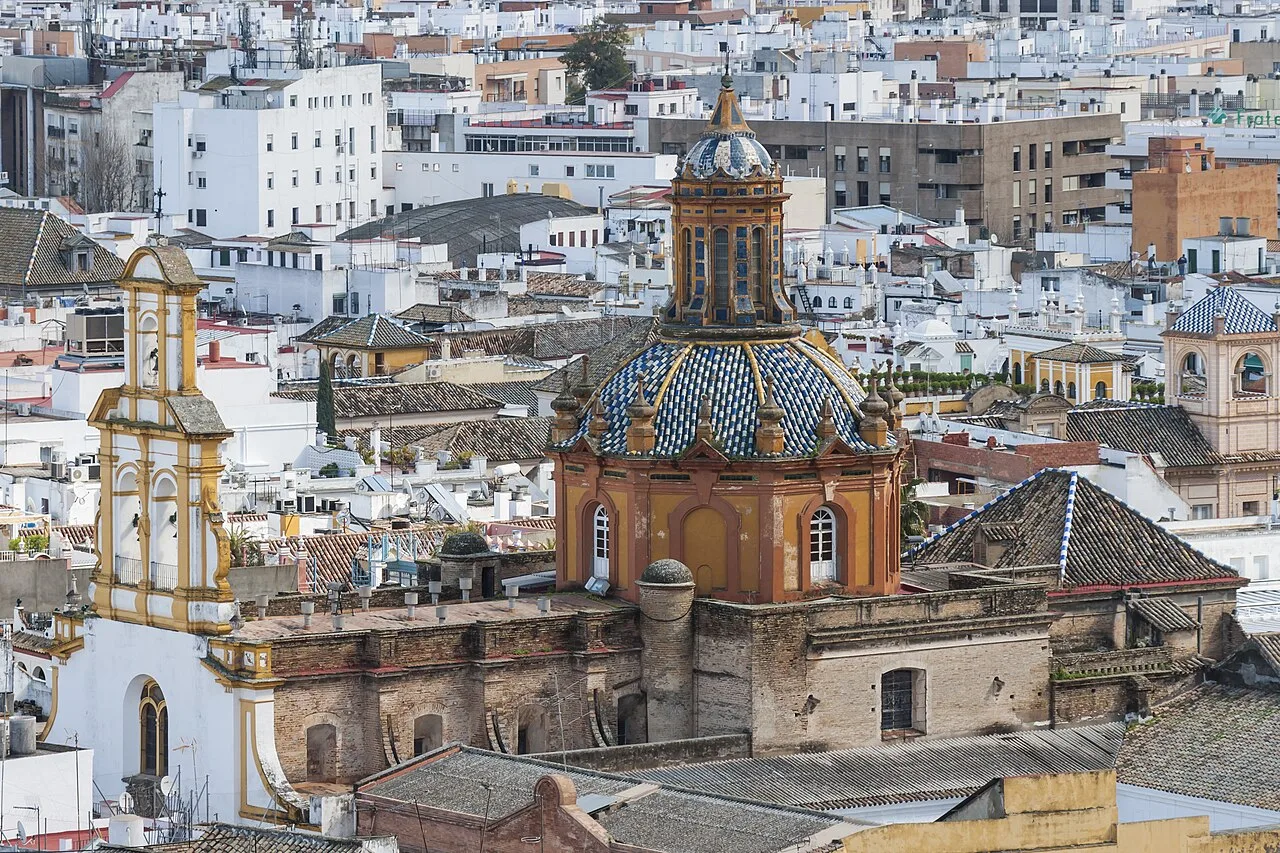
Santa Cruz is not uniformly step-free or traffic-free. Uneven paving, kerbs, crowding and narrow sections can matter more than the lack of steep hills. Wheelchair users, families with strollers and anyone wanting fewer surface changes can omit this detour and continue from the Cathedral toward Salvador. The photograph shows the Iglesia de Santa Cruz above the surrounding roofs for district context, not the view from every street in this itinerary.
Continue via Salvador to Las Setas
Back near the Giralda, use Calle Placentines and Calle Alemanes to reach Calle Hernando Colón, then continue to Plaza de San Francisco. From there, connect via Entre Cárceles to Calle Francos and Plaza del Salvador. Continue along Calle Cuna toward Calle Laraña, then follow the signed crossings toward Plaza de la Encarnación and Las Setas. Allow about 45–60 minutes with stops, rather than treating every street as a quick transfer.
Salvador is a useful decision point: pause here, finish your walk, or continue to the final landmark. Looking at the church from the square is separate from entering it. General Cathedral admission includes El Salvador, but the extra interior still needs its own opening-hour and time check.
At Las Setas, viewing the structure from the surrounding square does not require buying the rooftop experience. If you book the viewpoint, use the operator's entrance information; the south access is on the Imagen Street side. The official Setas visit page estimates 60–90 minutes for the full experience. Add that time to the walk, not inside the final street segment.
This is the main route's finish. Returning to Plaza de España or crossing to Triana adds more walking; neither happens automatically because you have reached the last stop. Check a bus route to your actual accommodation or arrange a pickup at a permitted road-accessible location.
Optional Extension: Triana and the River
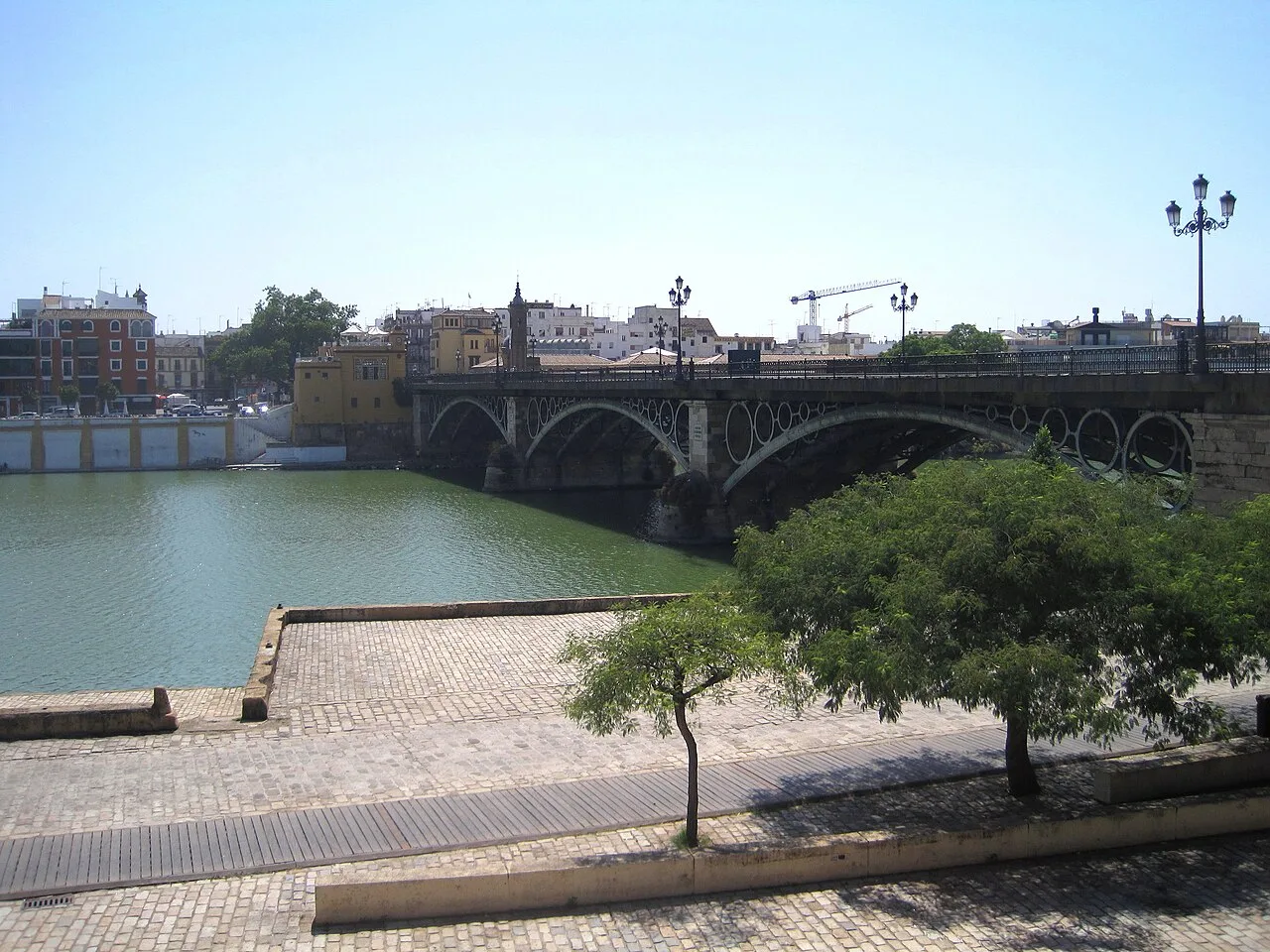
For a separate river walk, start from Puerta de Jerez, take Calle Almirante Lobo toward Torre del Oro, and follow the river north along the Paseo de Cristóbal Colón side toward Puente de Isabel II. Cross that bridge to Plaza del Altozano and Mercado de Triana. Keep the tower as an exterior stop unless you separately check museum entry. This branch fits another morning or a deliberate alternative after the Cathedral; adding it after Las Setas requires a walk back across the centre first.
Allow about 1½–2½ hours for this branch with riverside and market-area pauses, excluding a full meal and the return journey. At the river, distinguish the lower promenade from the street-level route: a staircase down is not an accessible connection back up. Stay on a usable upper route if you need to avoid steps, and follow local signs where works interrupt the pavement.
For food shopping, the market's own published hours are generally Monday–Saturday 09:00–15:00, with individual shop exceptions. Its wider building and hospitality hours extend beyond that. A late-afternoon drink is therefore not the same plan as browsing the food stalls, and Sunday is not a dependable substitute for a weekday food-market visit.
MetroCentro does not cross the river into Triana. For a return toward the Cathedral side, walking back over Puente de Isabel II is one option; check the onward walking distance before committing. Plaza de Cuba is a Metro station on the west side, but it is a separate walk from the market, not a stop at its door. Use the Metro stations and ticket guide to decide whether its line actually serves your destination.
Tickets and Interior Visits: Budget Time as Well as Money
The public-street walk and paid attractions are separate choices. The amounts below are published general-admission rates checked in September 2026, not a guaranteed checkout total or an offer for every date. Confirm fees, concessions, available sessions and included spaces through each attraction's official purchase link.
The official Alcázar booking FAQ requires respect for the chosen half-hour entry session and physical identification at access. Its 09:00 ticket-office opening is not the palace visit start. A limited same-day general-visit allocation may remain at the counter even when online tickets are sold out, but this is not guaranteed and should not anchor a tight itinerary.
Use the Cathedral's official schedule and rates for your actual day. Sundays, seasonal hours and worship can alter cultural access; an early walking start is not an early Cathedral booking. Check the final ticket details before paying.
For a half-day outing, choose outdoor sightseeing or one main interior with a shorter walk. Trying to fit the Alcázar, Cathedral, Setas, lunch and the full route into four hours removes the margin that makes the day workable. With two days, put the palace and Cathedral on separate schedules and keep Triana flexible.
| Visit | Published general rate | Time to add | Booking distinction |
|---|---|---|---|
| Real Alcázar | €15.50 | Allow 2–3 hours as an editorial planning allowance | Timed admission; gardens are part of the visit, not a public shortcut |
| Cathedral and Giralda | €13 online / €14 at the ticket office | Official estimate about 75 minutes, plus queues and your own pace | Includes El Salvador; Giralda is not step-free |
| Setas rooftop experience | From €16 | Official estimate 60–90 minutes | Slot and experience choice affect the plan; viewing from the square is separate |
Heat, Accessibility and a Comfortable Pace
Choose your start from the day's forecast, not a promise that every non-summer afternoon is comfortable. On a hot day, take the exposed Plaza de España and river sections early, shorten the itinerary, and reserve the middle of the day for a genuinely cool indoor break. A ticketed garden or tower climb is not automatically a heat break.
Spain's 2026 heat guidance advises drinking water frequently, spending time in cool places and reducing activity during the hottest part of the day. Carry water and identify somewhere to stop before setting out. Narrow lanes may have shade at one time and sun at another; no plaza is guaranteed to provide a seat or a cool rest stop.
A map cannot certify a step-free route. Check kerbs, temporary diversions, crossing points and surfaces as you go. For a shorter outing with fewer narrow-lane decisions, use Puerta de Jerez, the Cathedral surroundings and a chosen nearby stop rather than completing every section. Request attraction-specific access details in advance if those determine whether the day works.
The Cathedral's visitor rules describe ramps and narrow stairs in the Giralda and prohibit wheelchair and stroller ascent. Do not assume that ramps make the tower step-free. Setas advertises accessible lifts, but confirm assistance and current operation with the venue; that is different from verifying every street leading there.
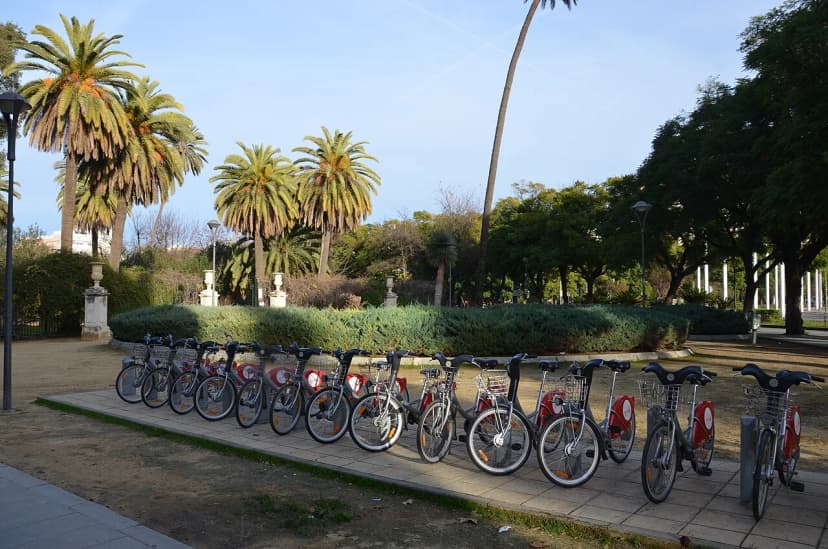
Cycling is a different outing, not a reliable remedy for dangerous heat or a way to ride through every pedestrian lane. If you prefer a cycle route on a suitable day, use the bike-hire and cycling guide to plan it separately.
Getting to the Start and Leaving the Finish
Choose the start that suits your arrival. Prado de San Sebastián Metro is an approach for the Plaza de España side; Puerta Jerez suits the short version. They are Metro Line 1 stations, while MetroCentro is the separate surface tram. Neither delivers you to every point in Santa Cruz or provides a circular sightseeing service.
From the airport, use the airport transfer options to reach town first, then allow time to reach your chosen starting point. If arriving by rail, check your named station in the Santa Justa and other Seville station guide; not every arrival uses the same station. Leave luggage somewhere appropriate before a long outdoor itinerary, and protect your onward departure buffer.
For coaches, the Plaza de Armas and Prado terminal guide helps avoid the wrong starting assumption. Use the TUSSAM route planner and notices for a bus from your actual finishing point. Las Setas, the Cathedral and Triana market are distinct origins, not interchangeable stop names.
The citywide transport guide compares the modes. Before buying a rechargeable transport product, check its operator coverage: a TUSSAM city product is not a universal Metro ticket. For one short return journey, compare the practical single-ticket option rather than assuming a pass is necessary.
Itálica is an excursion outside this central walking route. Use the bus trip to the Roman site for a separate day plan, not as an extra stop on this walk.
Before You Leave: Four Checks That Prevent a Rushed Walk
Set the itinerary around the least flexible part of your day: a booked entry, a transport departure or your group's comfortable walking limit. Everything else can be shortened.
- Save the street map and decide whether the start is Plaza de España or Puerta de Jerez; tell everyone where the route finishes.
- If entering a monument, check the ticket's date, time, door and identification requirements. Carry clothing that meets the Cathedral's shoulder-covering and dress rules.
- Choose a water and rest-break plan, then remove the exposed river extension if the weather makes it unsuitable.
- Keep enough time to leave the finish, collect luggage and reach onward transport. The walking allowances do not include those journeys.
Frequently Asked Questions
How long does the Seville walking tour take?
Allow 3–4 hours for the main outdoor route from Plaza de España to Las Setas, including pauses but excluding meals, queues and paid interiors. The short version starts at Puerta de Jerez and takes about 60–90 minutes. These are editorial planning allowances, not measured walking times.
Is this Seville walking route a loop?
No. It starts at Plaza de España and finishes at Las Setas. The Santa Cruz detour returns to the Cathedral area, but the overall route is point-to-point. Allow extra time for your journey back to the start or accommodation.
Is the self-guided walk free?
Following the public streets and viewing landmarks from outside does not require attraction tickets. The Alcázar interior, Cathedral cultural visit and Setas rooftop experience are separate paid visits. Local events, barriers and access restrictions can still affect outdoor areas.
Can I visit the Alcázar and Cathedral during the walk?
Yes, with suitable tickets and a longer schedule. Add roughly 2–3 hours for the Alcázar as a planning allowance; the Cathedral estimates about 75 minutes for its general visit. Queues, breaks and your pace need extra margin. Both interiors plus the full outdoor route are not a relaxed half-day plan.
Is the route suitable for wheelchairs or strollers?
It is not a verified step-free itinerary. Narrow Santa Cruz streets, uneven paving, kerbs and temporary works need individual assessment; the detour can be skipped. The Giralda prohibits wheelchair and stroller ascent. Confirm access directly with any attraction you plan to enter.
Should I add Triana on the same day?
Only if time, energy and weather allow. The river branch starts at Puerta de Jerez and reaches Triana market via Torre del Oro and Puente de Isabel II. Allow another 1½–2½ hours with outdoor stops, plus your return; a separate morning works better for the food stalls.



._Sevilla..JPG)