 Europe Nook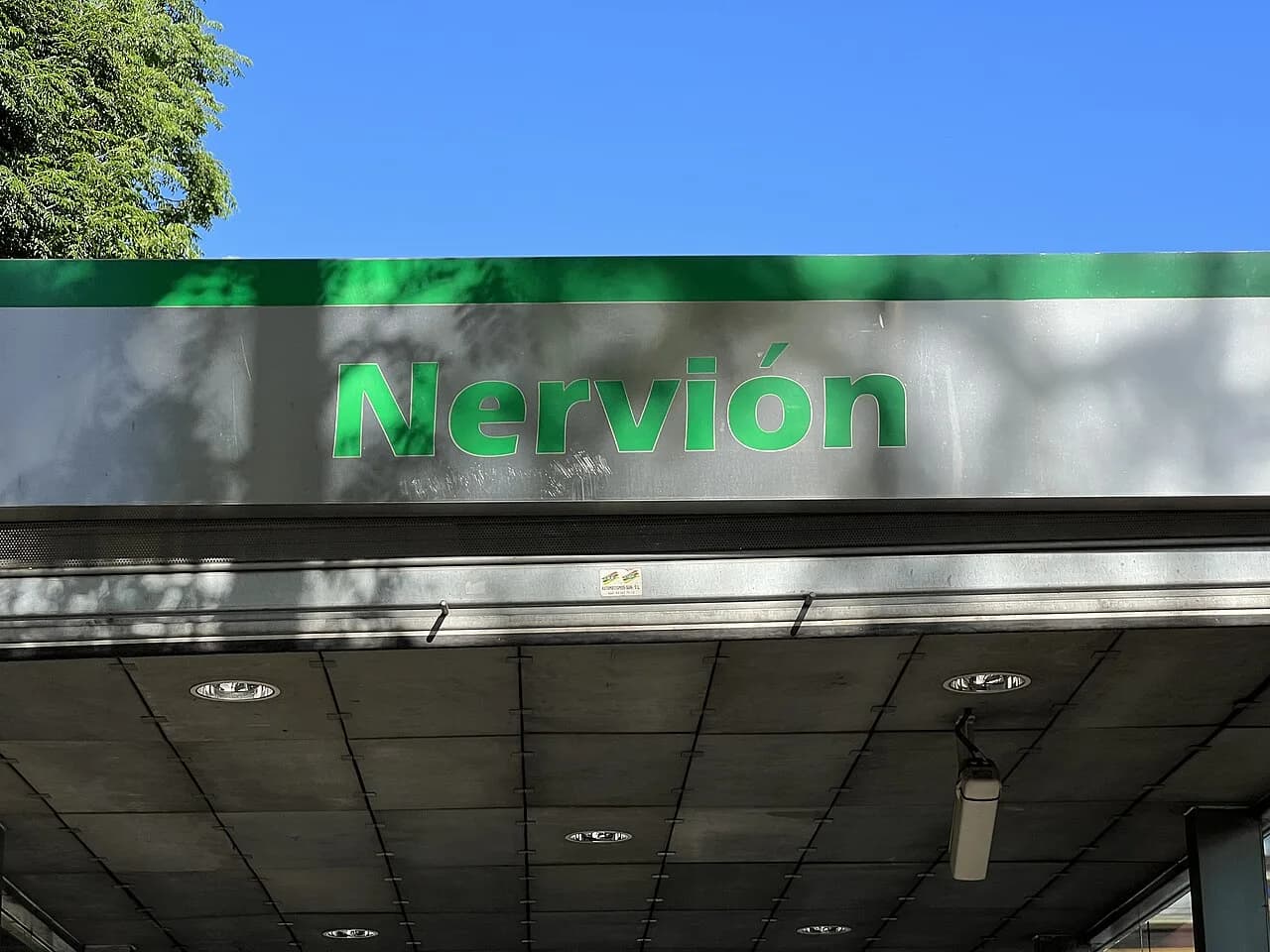
Last updated September 2026. Seville metro tickets are useful when Line 1 connects the places you actually need to reach. The line serves central interchanges as well as residential and university areas; it is not an airport railway or a direct link to Santa Justa. This guide separates ticket-machine purchases, rechargeable cards and bank-card gate payment, then helps you decide whether a Metro journey fits your day.
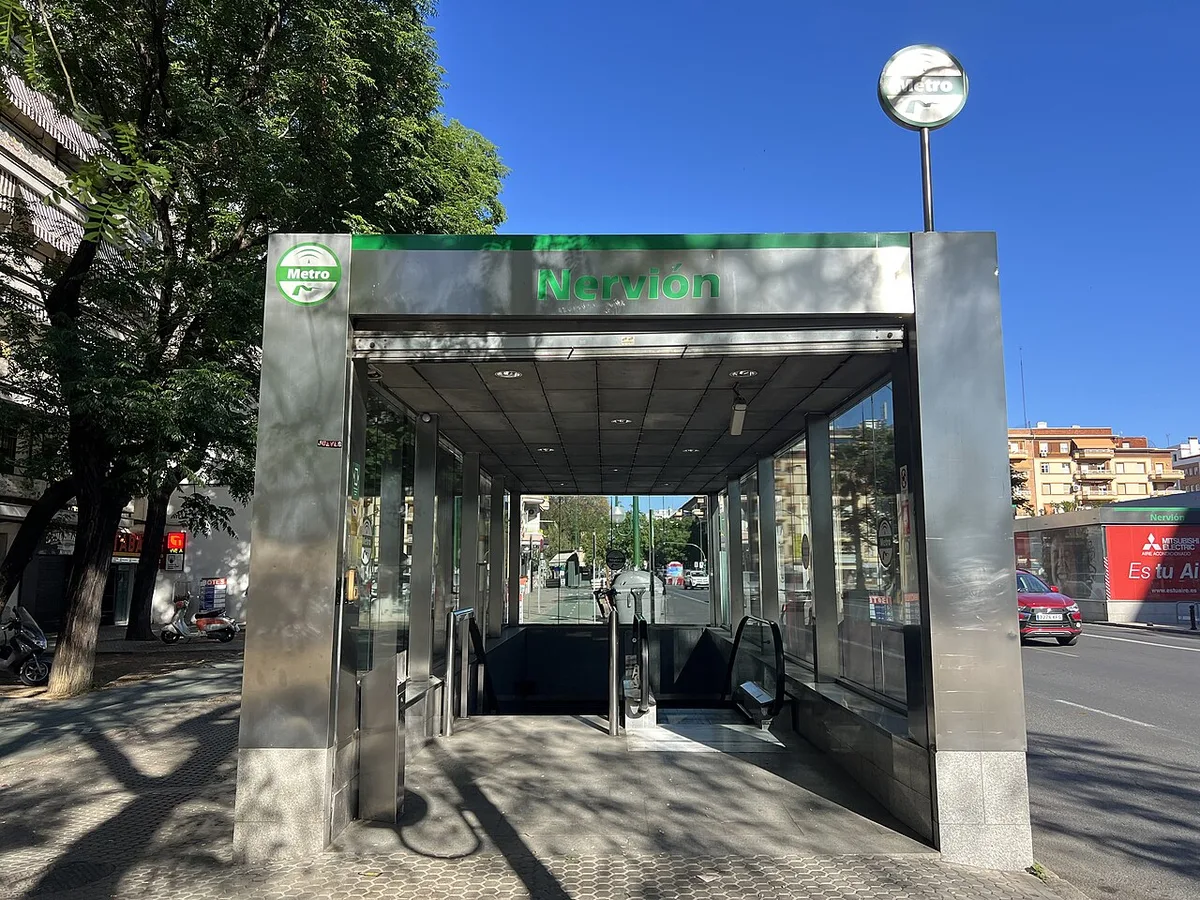
Historical 2023 Nervión Metro entrance sign; not a ticket-machine or live equipment-status illustration. Photo: Chabe01, CC BY-SA 4.0, via Wikimedia Commons. Resized and converted to WebP.
Quick Answer: Seville Metro Tickets and Prices
Start with your origin and destination in the operator's route planner. Metro uses three fare sections: a <em>salto</em> is a boundary crossing, not a station or the total number of zones used. Zero saltos means staying in one section; one salto uses two sections; two saltos uses all three. Blas Infante and Pablo de Olavide are shared boundary stations. Trips to either from its adjoining section can therefore remain zero-salto journeys.
The table follows the operator's published ticket prices. New Metro ticket support adds €0.30; keep it for reuse. The €4.50 day product covers its purchase day, not a rolling 24 hours. Metro tickets do not themselves buy onward TUSSAM bus, tram or airport travel. Compare the modes in the Seville public transport overview before buying.
| Ticket | 0 saltos | 1 salto | 2 saltos |
|---|---|---|---|
| Single | €1.35 | €1.60 | €1.80 |
| Return | €2.70 | €3.20 | €3.60 |
| Purchase-day Metro pass | €4.50 | €4.50 | €4.50 |
How and Where to Buy Tickets
At a station machine, choose the ticket type and the appropriate fare crossing for the journey. Check the displayed total before paying and keep the rechargeable support afterwards. Buying or loading a ticket is separate from validating it at the gates. If the menu or a reader is unclear, use the station help point before entering; do not follow another passenger through a gate.
Tap&Go is a different option: an eligible contactless bank card, including a supported mobile-device version, can be used directly at the Metro access readers without purchasing a ticket at a machine. This is not merely contactless payment for a paper ticket. Check the operator's current conditions before relying on a particular card or a registered-user fare benefit; the single-ticket table above is not a promise of what every Tap&Go transaction will charge.
For a first journey, decide on one payment medium and keep it accessible until you have left the destination station. A physical bank card and its phone or watch version should not be treated as interchangeable mid-journey. Follow the reader instructions and use the same chosen medium throughout. Have a backup payment option if a reader rejects the first one, but ask for help before mixing media after entry.
The operator distinguishes ordinary occasional Tap&Go use from registered post-payment benefits in its dated explanation of the system. That historical announcement is not a current price guarantee. Registration, charging cycles and any automatic fare optimisation should be checked on the current Tap&Go service before you build a budget around them. No bank-card account needs to be created just to compare the machine-ticket options here.
- Check the destination and the number of saltos before confirming a machine purchase.
- Validate on entry, keep your ticket/card, then validate again on exit.
- Use the marked wider gate if travelling with a wheelchair, pushchair or bulky luggage.
- If the gate does not accept the ticket or card, use the help point instead of forcing it or tailgating.
Hours, Frequency, and Timing Tips
The official normal-hours page gives the schedule below. Its end time is the last train departure from the terminal stations, not a promise that every entrance closes at that exact moment. A 02:00 end belongs to the following calendar morning. Event services and operating notices can change these normal hours.
Do not plan a tight airport or intercity-rail connection from the normal operating window alone. You still need the walk to the station, the next departure, the ride, the exit and any onward transfer. Check the operator's next-train information shortly before travelling. A historical peak-frequency announcement cannot establish today's wait at your station, and there is no single all-day interval that fits every day and hour.
For late travel, work backwards from the connection you cannot miss. If reaching the Metro requires another bus or tram first, check that service separately; a late Metro train does not mean the feeder service runs equally late. Keep enough flexibility to change the route if a station notice or live departure board disagrees with your earlier plan.
| Normal service day | First terminal departure | Last terminal departure |
|---|---|---|
| Monday–Thursday | 06:30 | 23:00 |
| Friday and holiday eves | 06:30 | 02:00 next day |
| Saturday | 07:30 | 02:00 next day |
| Sunday and holidays | 07:30 | 23:00 |
Do You Actually Need the Metro?
Choose by addresses, not by the idea that Metro is only for the suburbs or automatically best for every visitor. Puerta Jerez is useful for the southern edge of the historic centre; Prado de San Sebastián and San Bernardo are practical interchanges, and Nervión can suit accommodation or other plans in that district. On the west side of the river, compare Plaza de Cuba and Parque de los Príncipes with the precise address you want. A neighbourhood name alone does not tell you the walking distance from the station.
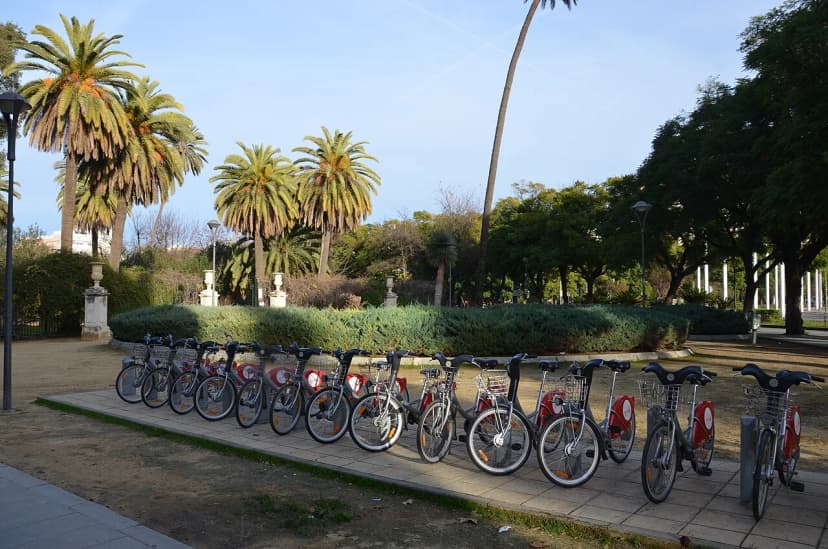
For nearby sights, a self-guided Seville walk may avoid the detour to a platform. That is a route choice, not a claim that the whole city is effortless to cross on foot. Heat, luggage, shade, mobility needs and where you finish the evening can all change the useful option. Likewise, bike hire options in Seville needs a suitable route and return plan; it is not guaranteed faster than Metro.
Santa Justa is separate from San Bernardo. The Santa Justa station guide covers onward city access from the main intercity terminal. If your plan includes a train trip to Córdoba, check the booked train and station through Renfe, then allow a separate city-transfer margin.
The Seville coach-station guide distinguishes Plaza de Armas from Prado. Plaza de Armas is not a Line 1 station; Prado's coach terminal is near Prado de San Sebastián Metro but is a separate boarding location. Do not treat the coach bay, city-bus shelter and Metro platform as one place. The map below is Nervión-area orientation, not a fare-zone map or a live service diagram.
Metro vs. Tram vs. Bus vs. Walking
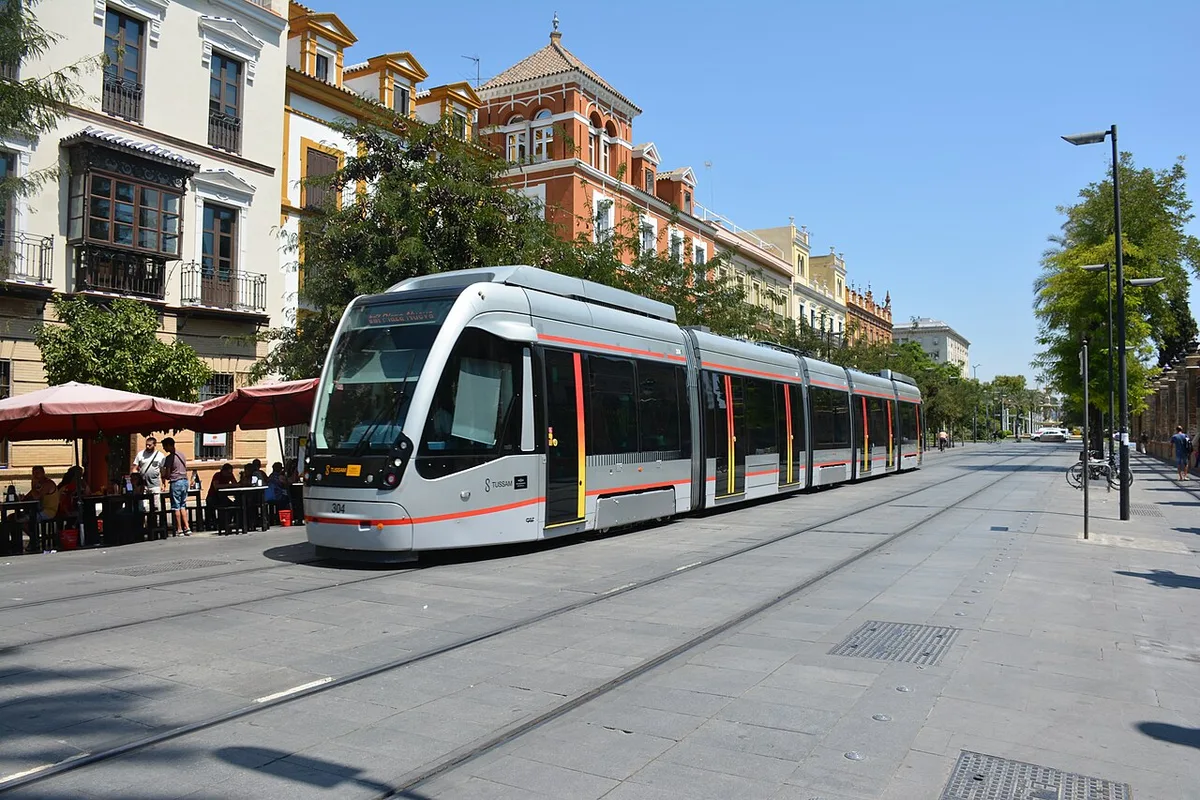
Metro Line 1 and the MetroCentro tram are different services. For the September review, the tram guide documents service between Archivo de Indias and Luis de Morales, with the Plaza Nueva restriction explicitly dated. An older photograph or map showing Plaza Nueva does not establish that boarding there has resumed.
Ordinary TUSSAM bus and tram singles cost €1.40, not the older €1.30 quoted in some guides. Its stored-value and tourist products have their own conditions; a TUSSAM tourist card is not a Metro day pass. Likewise, Metro's confirmed bank-card gate system does not establish the same onboard payment procedure on a tram.
Use the comparison to choose which service to investigate, then look at the actual stops. A transfer that seems short on a schematic may involve different entrances, road crossings or a wait. Avoid buying several day products in advance simply because their names sound comprehensive.
| Mode | When to compare it | Ticket boundary |
|---|---|---|
| Metro Line 1 | A useful station near both journey endpoints | Metro fares by saltos; not a TUSSAM tourist pass |
| MetroCentro tram | Archivo de Indias–San Bernardo–Nervión corridor, subject to current notices | TUSSAM products; separate from Metro |
| Ordinary city bus | A bus route closer to your actual addresses | Check TUSSAM route and ticket; EA is separate |
| Walking | Nearby stops and sights with a suitable pedestrian route | No fare; allow for heat, surfaces and distance |
Discount Cards and Choosing a Pass
Bonometro is Metro's rechargeable stored-value product. The operator currently displays discounted fares of €0.49, €0.70 and €0.82 for 0, 1 and 2 saltos; loading starts at €10 and goes up to €50. Its July 2025 fare leaflet is useful for product structure, but the Junta's 2026 continuation notice is the relevant subsidy-period evidence. Recheck the actual price when loading, especially for later travel.
Consider both consumed fares and initial cash outlay. Four zero-salto singles cost €5.40, so a €4.50 purchase-day pass can beat those singles. Three one-salto singles cost €4.80. But four discounted zero-salto Bonometro rides use only €1.96 of credit: the pass is not automatically cheaper than stored value. A minimum reload and remaining balance matter on a short visit, and you should not count hypothetical future rides as savings.
The Consorcio transport card is the multi-operator alternative, accepted on participating services including Metro and ordinary TUSSAM bus/tram. Airport and special TUSSAM services are excluded. Each mode keeps its own fares and zones. Eligible transfers have mode-dependent reductions of up to 20%, with subsequent transfers within 120 minutes of the first validation. This is not free travel for two hours or a flat discount on every possible connection.
Use the Seville transport-card comparison to separate these products. The Consorcio Youth Card requires an application and is aimed at Andalusian residents under 30; it is personal, not an automatic discount for every visiting young adult. Other concessions likewise require their specific eligibility and support. Do not stack percentages from unrelated schemes or assume a foreign student card activates a local fare.
Validation, Accessibility and Mistakes to Avoid
The operator's travel instructions require validation at both ends. Keep the ticket available after boarding. When a product permits group use, the passengers must make the journey together; that is not permission to split up and reuse one card in different stations. A day pass is individual. Ask staff about the exact group procedure before the first person passes the gate.
For step-free travel, distinguish the street approach, the correct entrance, the access gate and the train-platform gap. A photograph of stairs is neither proof that a station lacks a lift nor proof that the lift is working. Consult Metro accessibility information and current station status, and use the assistance point if the planned entrance is unavailable.
The optional CEA CAPA Education Abroad video below is a general Metro orientation aid. Its title and creator were checked, but its playback and every statement were not verified. Use the operator links above for current payment, fares and service; do not let an older video override a station notice.
- Do not expect Line 1 at the airport: use the Seville airport-transfer guide for separate options.
- Do not discard a ticket after entry; it is needed on exit.
- Do not read zero saltos as travelling outside all fare zones.
- Do not assume a purchase-day pass lasts until the same time tomorrow.
- Do not treat Metro, tram and coach terminals with similar names as the same boarding point.
- Do not buy a pass before comparing the journeys you will actually make and any initial card or reload costs.
Frequently Asked Questions
How much does a Seville metro ticket cost?
A single costs €1.35 for zero fare-boundary crossings, €1.60 for one and €1.80 for two. New reusable Metro ticket support adds €0.30. Check the origin and destination before selecting a fare.
Can I pay directly with a bank card on Seville Metro?
Yes, Tap&Go allows eligible contactless bank-card or supported mobile-device payment at Metro access readers without buying a ticket at a machine. Use your chosen medium throughout and validate on exit as well as entry. Check current conditions before assuming a registered-user benefit or a specific charge.
Does the Seville metro go to the airport or Santa Justa?
No. Neither the airport nor Santa Justa is a Line 1 stop. San Bernardo is a different rail interchange. Allow a separate transfer when planning an airport or intercity-train connection.
Is there a day pass for Seville Metro?
The €4.50 Metro day ticket permits unlimited Metro journeys on its purchase day. It is individual, not a rolling 24-hour pass, and does not include ordinary TUSSAM buses or the tram. Compare it against stored value as well as singles.
Do I validate a Metro ticket when leaving?
Yes. Validate at the entry gate and again at the exit gate, keeping the ticket or payment medium until the journey is complete. If a gate rejects it, use the station help point.
Is the Consorcio card the same as a Metro ticket?
No. It is a separate multi-operator stored-value option with participating-service and transfer conditions. Metro-only tickets do not acquire its wider coverage. Its transfer window is not an unlimited two-hour pass.
Are Seville Metro stations accessible?
Check the required entrance and current equipment status for each station. Use the marked wider access gates when needed and consider the street approach and train-platform gap. A historical entrance photo does not certify that a lift is working today.

_-_2023-04-25_-_3.jpg)